 Skip to content


Imagine being able to edit dozens or even hundreds of product photos at once, without spending hours doing tedious work in graphic design software. But today, that’s no longer just science fiction.
Google has just introduced two new AI tools that simplify and speed up image editing. But how exactly do these new features work, what can they do, and where do they still fall short? Let’s take a closer look…
AI that works for you
Google has long been investing in artificial intelligence and its applications in advertising and e-commerce. Now, it’s introducing two standalone AI features for bulk image editing: one integrated within the Google Ads platform and the other directly in Merchant Center. The goal of these tools is to significantly simplify and speed up work with product photos, which are crucial for success in online sales.
Google Ads: Bulk Image Editing
In Google Ads Manager, you’ll now find a new AI image editor directly within your media file library (known as the Asset Library), which allows you to edit up to 100 images at once. What does that mean in practice?
Background changes – You can, for example, remove distracting elements in the background or completely replace it with a visual that better highlights your product and captures the attention of your target audience.
- Object addition – You can also add elements to the photo to enhance or complement your product. This could be a logo, a discount icon, or any other visual element.
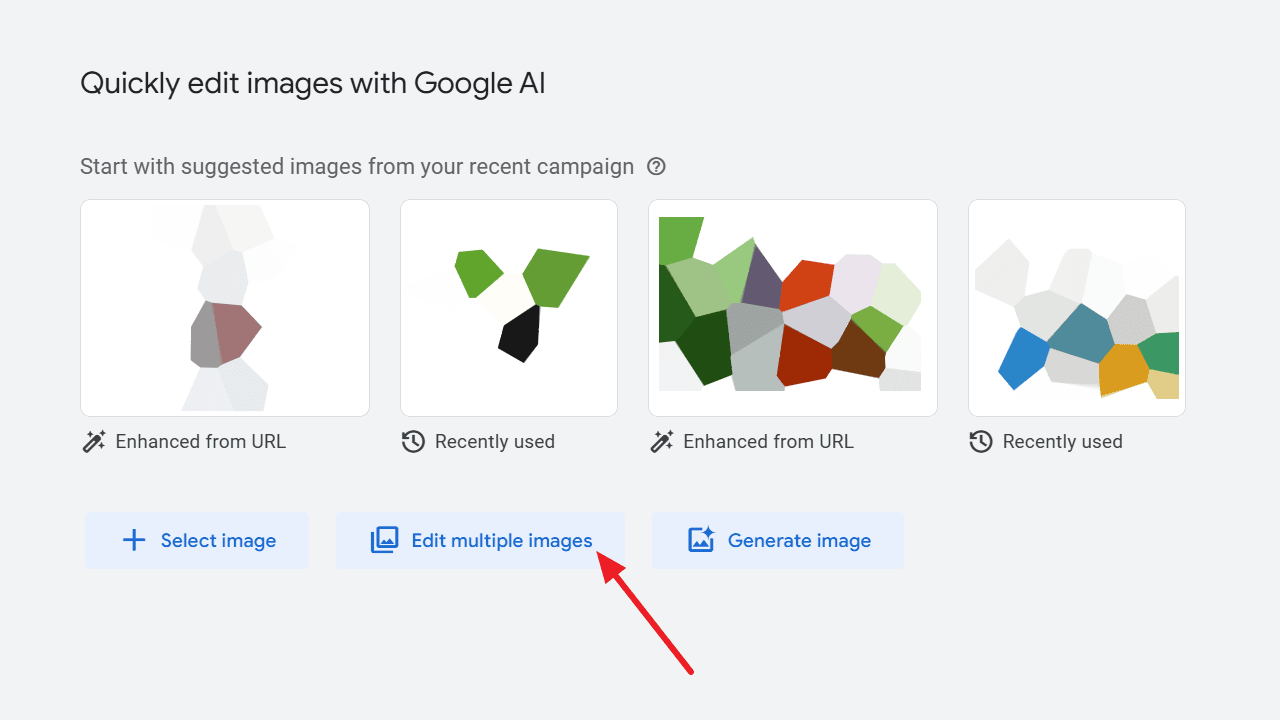
Source: PPC News Feed
How does it work?
All you need to do is enter a simple text prompt, and the AI will automatically edit your images based on it. The application even allows you to edit individual images separately when you need to fine-tune the details. The edited photos can be used immediately in your ad campaigns, saving you a significant amount of time that would otherwise be spent on manual editing.
Merchant Center: “Generated for You”
The “Generated for You” feature in Merchant Center takes a slightly different approach than the previously mentioned tool in Google Ads. Here, the AI automatically selects several products from your catalog and generates enhanced images for them.
These enhancements specifically include:
Resolution enhancement – Images become sharper and more detailed, significantly improving their visual impact on websites or in ads.
- Background addition – The system automatically selects backgrounds that best match the product, making the photo more attractive.
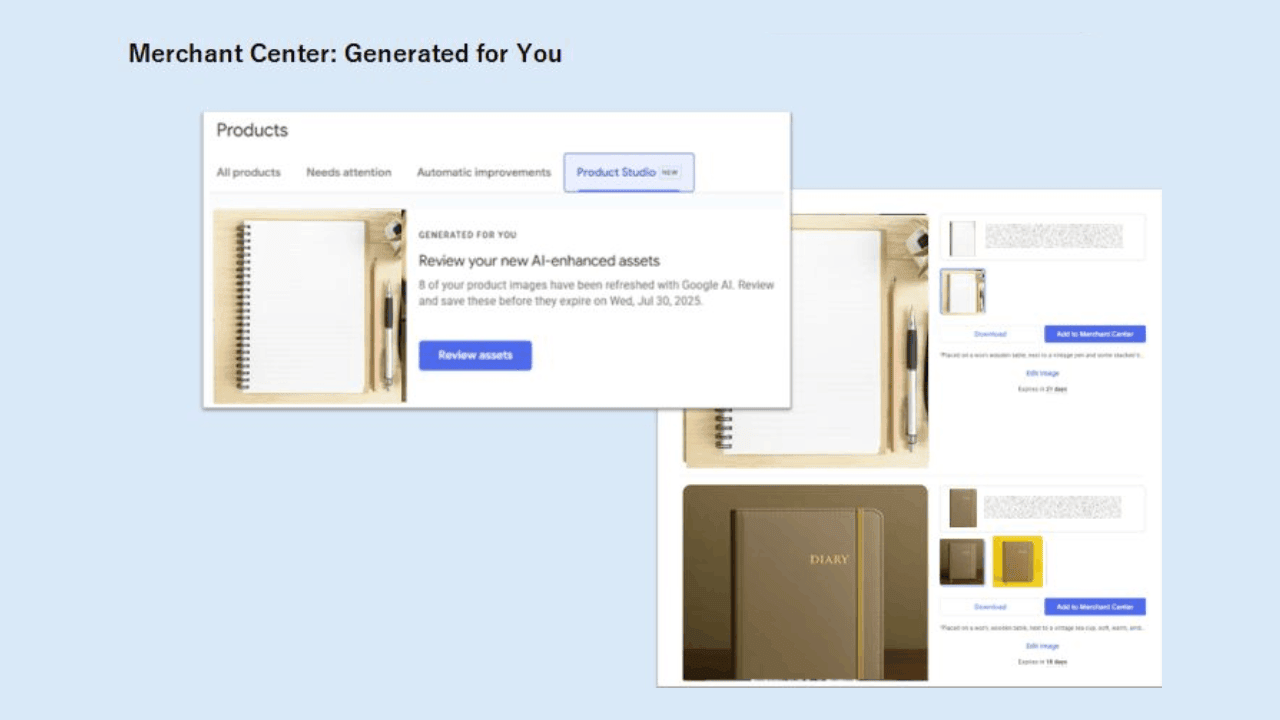
Source: PPC News Feed
However, users don’t have the option to choose which products will be enhanced. The AI does it automatically, and often only for a very small part of the catalog.
You can preview, approve, download, or further edit the enhanced images using the Generate Scene tool. If you don’t approve the suggestions in time, they will be automatically deleted. So it’s important to act quickly.
Pros and cons
Both tools offer significant speed and automation when working with product images, directly within Google platforms and without additional costs. For small and medium-sized e-shops that don’t have the resources for large design teams, these features can be a major help.
On the other hand, while the Google Ads AI can edit up to 100 images at once, the results don’t sync back into Merchant Center, which makes long-term catalog management more complicated. The Merchant Center AI automatically selects only a small number of products without allowing manual selection, so large retailers don’t have full control over which images get enhanced.
If you manage a large catalog with thousands of products, neither feature is the ideal solution for you just yet.
Conclusion
The new AI tools in Google Ads and Merchant Center represent a big step forward in automating and speeding up work with product photos. While they don’t yet offer all the features needed by large e-commerce players, they clearly point to the future of online sales being driven by smart automation.
AI is already helping create better, more attractive, and more professional-looking product images, and that’s great news for anyone looking to succeed in the competitive e-commerce landscape.