 Skip to content


If you advertise products through Google Merchant Center, you may not have noticed a quiet but important change in the rules regarding the use of brand names in product titles.
As of October 2025, Google has clarified its policy… you can only include your brand or e-shop name in the product name if you are the actual manufacturer. If you are only a seller or reseller, you must stick to the manufacturer’s brand. This applies even if you have a strong e-shop brand that you would like to see everywhere.
What is changing and who is affected?
The change affects the short title attribute, which is used in Google Merchant Center to display products in ads. In the past, Google recommended that sellers include the brand name – either their own or the manufacturer’s – in the product name, as this helped users better identify the offer.
From now on, however, the rules are stricter:
You can only use your brand or company name if you manufacture the product.
- If the product is manufactured by someone else, you can only include the manufacturer’s brand in the name, not your own.
In other words: seller ≠ product brand. And Google now clearly requires this.
How does this work in practice?
Let’s imagine two situations:
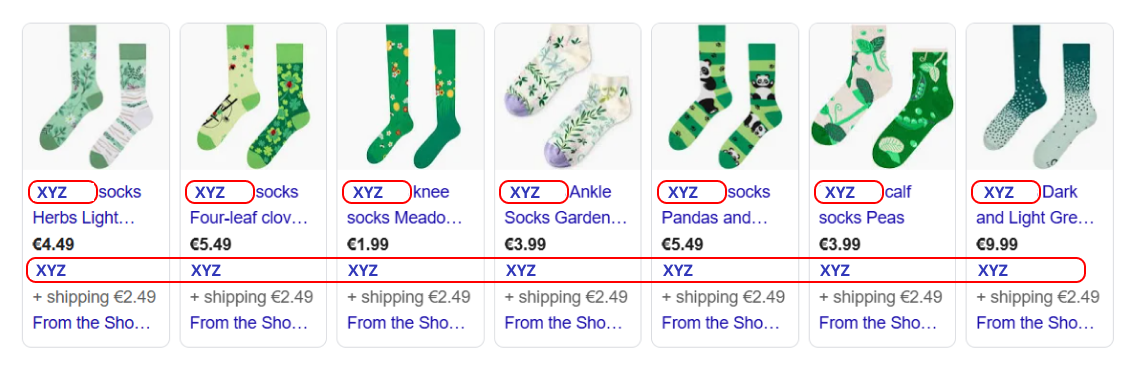
Scenario 1: E-shop XYZ sells its own products
In this case, e-shop XYZ is both the manufacturer and the seller. It has full rights to include “XYZ” in the product name, as it represents the brand of the manufacturer.
Correct:
XYZ cheerful socks
Scenario 2: Another e-shop (e.g. ABC) sells XYZ socks
Here, the e-shop is just a reseller. It didn’t manufacture the product, it only distributes it. Therefore, it cannot use its own brand or store name at the beginning of the product title.
Incorrect:
ABC cheerful socks XYZ
Correct:
Cheerful socks XYZ
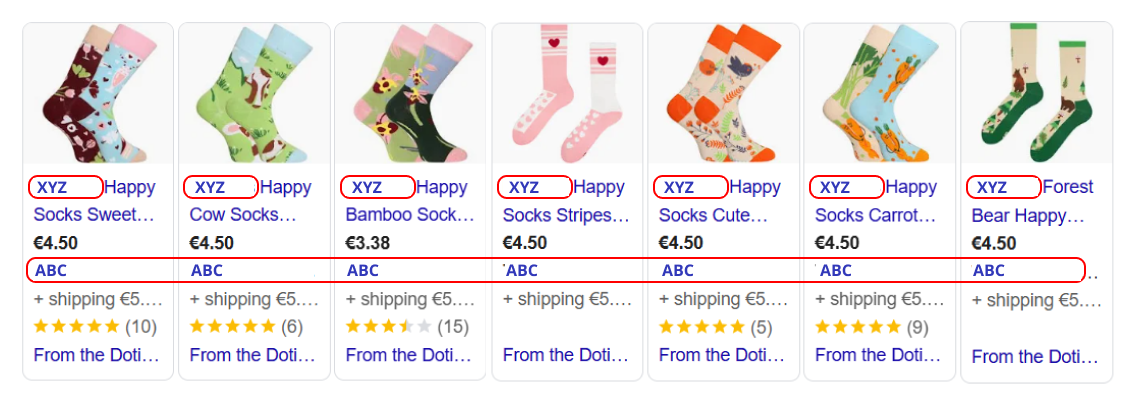
Google wants users to be able to see the actual manufacturer of the product at first glance, not the name of the seller.
How to adapt to the new policy?
For most merchants, this change will have minimal practical impact, but it’s good to know what to adjust and why in order to avoid problems with product rejections or performance declines.
In addition, Google points out that the manufacturer’s brand is already displayed in the store name (e.g., XYZ), so it is not always necessary to have it at the beginning of the product name. From a performance perspective, it is often better to start the product name with keywords such as type, color, material, target group, etc., and add the brand at the end.
What should you do now?
If you manage a product feed, we recommend that you:
- Check the product names in the feed (focus on the short title)
- Verify that the brand in the product name corresponds to the actual manufacturer.
- If you are a seller, remove any references to your brand or e-shop name.
- If you are a manufacturer, you can keep the brand name (but we recommend testing the placement)
- Prioritize keywords in the product name that match the search intent.
Conclusion
Be compliant, be visible.
While this update is not revolutionary, it can mean the difference between a product that is displayed and a product that Google rejects or reduces its visibility.