 Skip to content


A wake-up call for e-shops: Your graphic tee could be blocked by Google as a political ad starting April 16th.
You open your Google Ads account in the morning and find that dozens of your products are glowing red with disapprovals. After all, you sell clothes, books, or funny mugs, not a political campaign. However, Google doesn’t care.
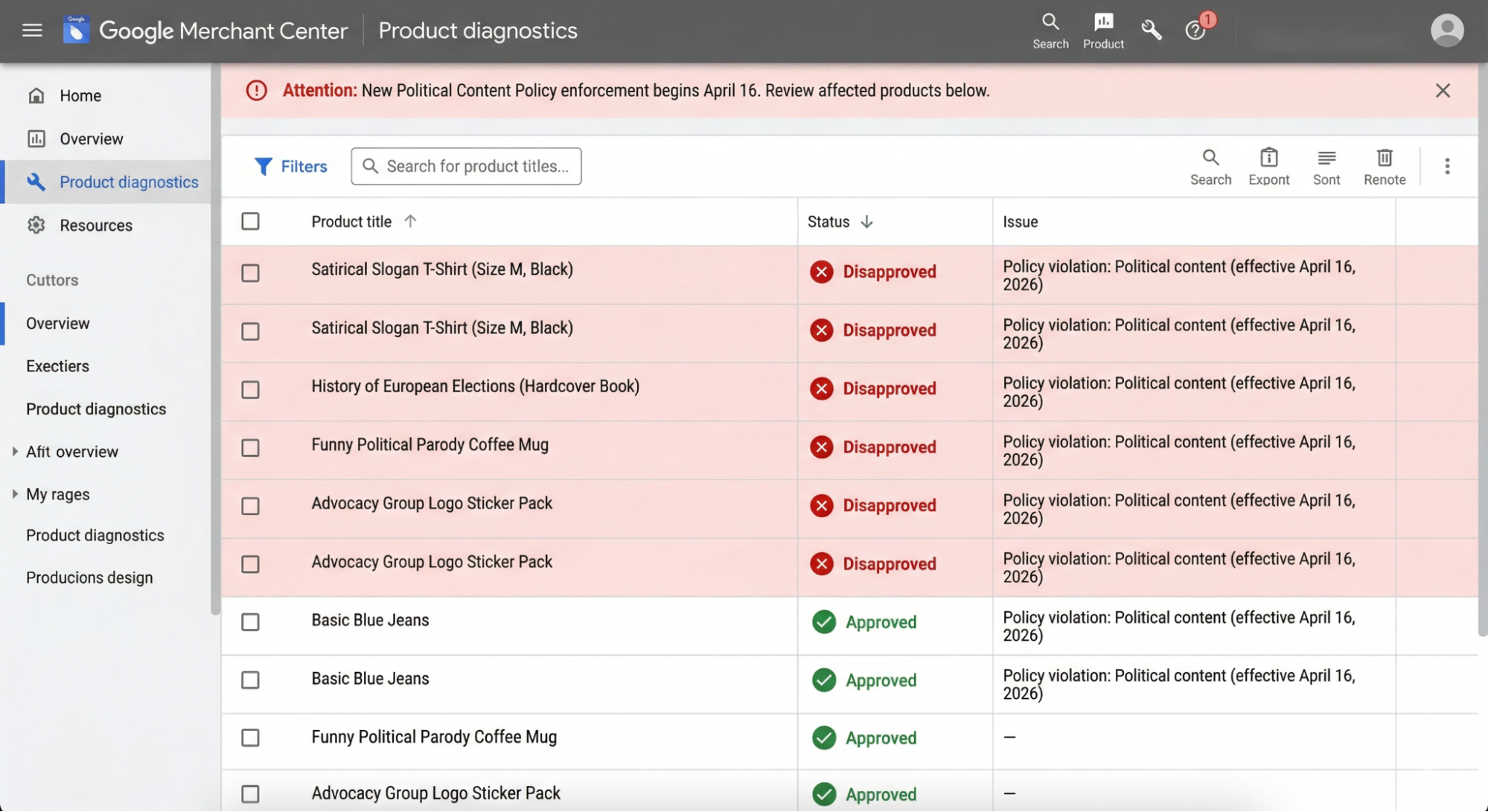
Source: AI-generated image
As early as April 16, 2026, a major policy update for Google Shopping comes into effect, radically changing the perspective on what constitutes “political content”.
If you think this doesn’t affect you as a regular e-shop, pay close attention. You have exactly one week left to clean up your product feed; otherwise, you risk not only having your products disapproved but also having your entire campaigns blocked.
It’s not just about politicians. It affects your catalog too
The biggest mistake e-commerce managers are making right now is ignoring this update, assuming they aren’t a political organization. As ALM Corp points out in their analysis, many of the affected sellers will be classic e-commerce brands, publishers, or print-on-demand e-shops.
All it takes is for your product to marginally touch upon elections, social issues, legislative topics or include the name of a public official – for example, a satirical t-shirt, a book on political history, or a campaign mug.
This is because Google evaluates not just the product itself, but its broader context: descriptions, images, landing page copy, and structured data.
Where do the new rules apply and what is changing?
According to official Google Merchant Center announcements, the new restrictions primarily target specific markets.
Mandatory advertiser verification: If you want to sell politically leaning goods in countries like the USA, the UK, Australia, Argentina, Chile, Israel, Mexico, New Zealand, and South Africa you will need to undergo a special Election Ads Verification process.
Complete ban: In India, political content will be completely banned in Google Shopping.
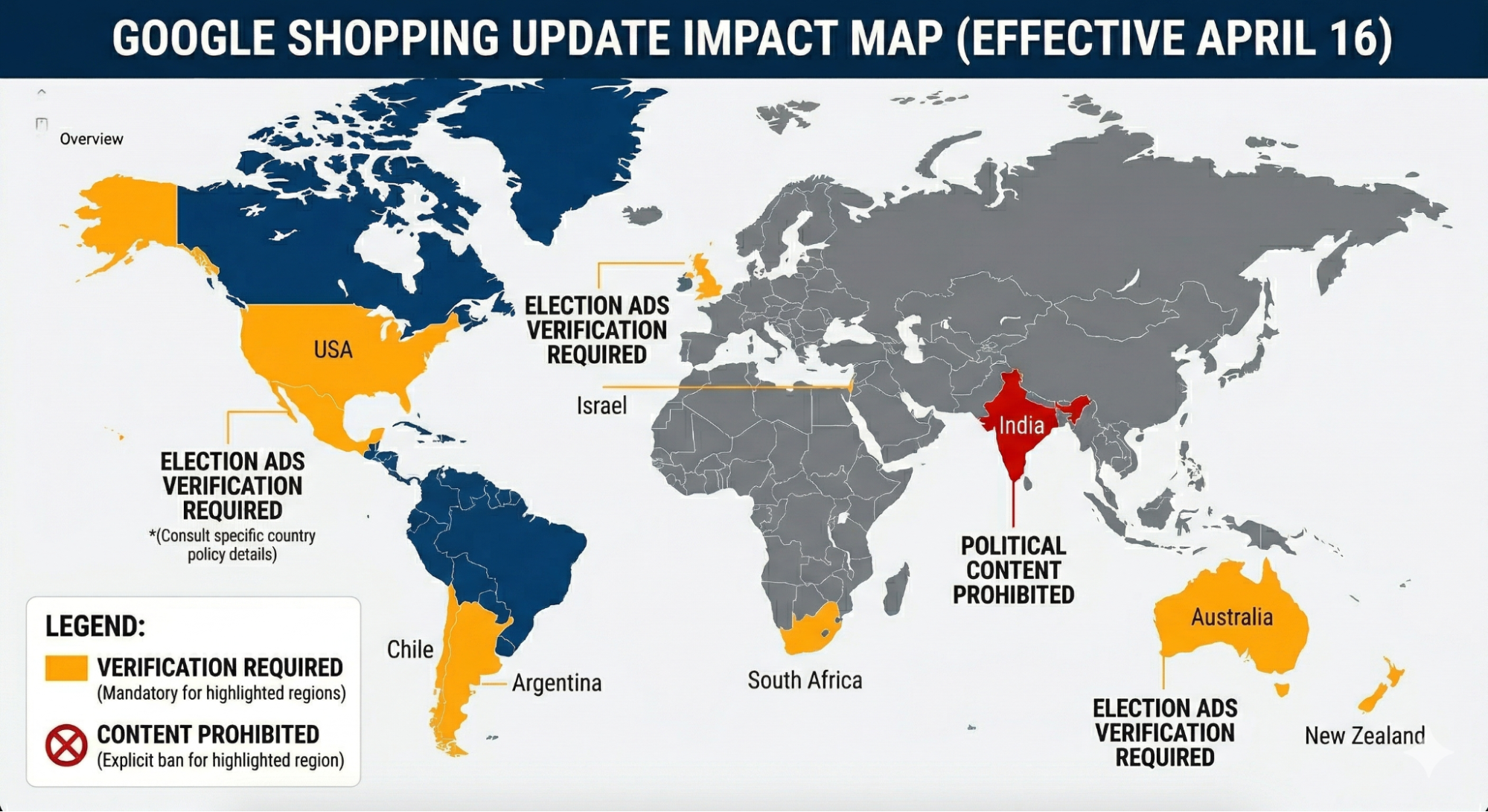
Source: AI-generated image
Pay attention to your billing as well. The verification process is not a one-time deal. If you make significant changes to your billing profile in Google Ads, Google may require you to undergo the verification process again.
Action Plan: What you need to do by April 16th
This update isn’t just a minor task for a PPC specialist. It’s an issue of managing your entire catalog. If new products enter the feed unchecked, the problems will keep coming back.
Here are 4 steps to protect your campaigns from downtime:
- Basic catalog and feed audit:
Run a keyword check on product titles, descriptions, and URLs. Look for names of politicians, party names, elections, or sensitive social slogans. - Don’t delete everything indiscriminately:
The worst thing you can do is to blanket-delete everything that “smells” like politics. Divide the identified products into segments: high risk, borderline products, and low risk. Then make decisions based on the market you sell in. - Beware of user-generated content (UGC / Print-on-demand):
If you run an e-shop where customers or creators design their own prints (for example, through custom platforms), you are at the highest risk. New designs can be added to the feed faster than you can review them. You must implement a “gating process” before these items are sent to the Merchant Center. - Prepare for verification:
If you know that your core assortment falls under these rules and you sell in the aforementioned foreign markets, start the verification process immediately.
Conclusion
With this change, Google Shopping is firmly integrating into a stricter content control system. E-shops that clean up their data and feeds today will not only protect their budgets but also gain a competitive advantage over those who will be desperately dealing with blocked accounts starting April 16th.