 Skip to content


The field of e-commerce is highly complex. For our online ads to work effectively and achieve the desired results, much more is needed than just attractive visuals. We must first define what we specifically want to achieve with our campaign. For example, we may aim to increase total sales volume or simply focus on boosting profits. Goals can vary, but based on them, we then choose the most appropriate strategy and campaign setup.
Different metrics, known as KPIs (Key Performance Indicators), are used to evaluate the success of advertising in marketing. Basic KPIs include total revenue, overall conversion rate, ROI, or ROAS. In this article, we will delve deeper into ROAS and its extended metric, POAS.

The Importance of the ROAS Metric
The ROAS (Return on Ad Spend) metric evaluates the return on investment in advertising. It indicates the conversion value generated by an ad. ROAS is usually expressed as a percentage, and its calculation is straightforward: advertising revenue is divided by advertising costs. The resulting value is then multiplied by 100 to obtain the exact percentage. By using ROAS, we can evaluate how to best allocate our advertising budget and optimize campaigns to improve their performance.
It is important to note that ROAS does not necessarily indicate whether an ad is truly profitable or unprofitable. It only measures the efficiency of the campaign and how it performs over a specific period. This is because the ROAS calculation only considers advertising costs, not the total expenses invested in the project, which means it cannot precisely define the overall profitability of the campaign.
For the ROAS metric, we recommend defining in advance the minimum percentage value that your business should not fall below. You should also identify the ideal percentage for your specific business needs. The optimal ROAS value varies significantly across industries and sectors, and also depends on the particular marketing goals you have set.
While the ROAS metric is widely used by marketers and sales professionals, it does have certain limitations. Because it only considers advertising costs and not the total expenses of the project, it can sometimes lead to an overestimation of campaign performance. For instance, if your additional costs related to product manufacturing and distribution are too high, the ROAS value may look favorable, but the campaign could still be operating at a loss.Additionally, ROAS is focused on short-term revenue and does not take into account long-term costs or the Customer Lifetime Value (CLV). This can result in funding campaigns that do not contribute to long-term business growth.Lastly, relying solely on ROAS for budget allocation can lead to inefficient spending. You may prioritize campaigns with a high ROAS for perceived profitability, but the selected products may also be generating high production and distribution costs. To avoid such pitfalls, it is essential to consider other metrics alongside ROAS for a more comprehensive evaluation.
The Importance of the POAS Metric
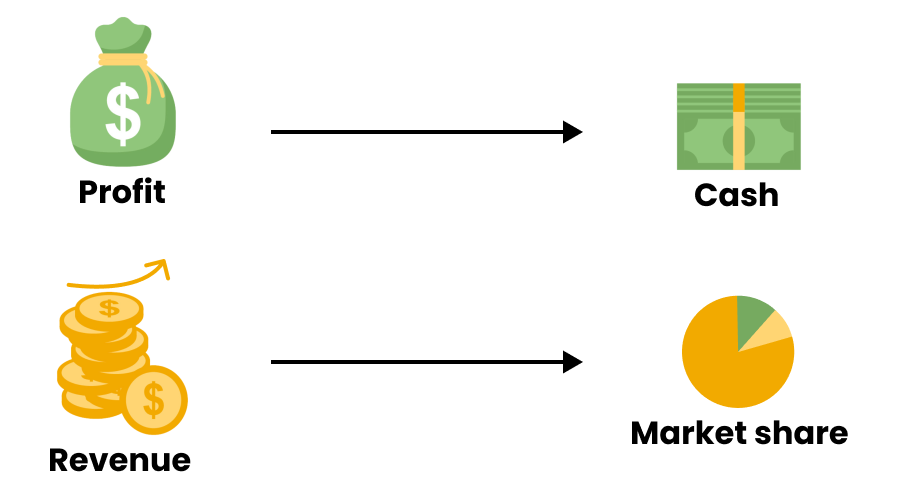
POAS (Profit on Ad Spend) is an alternative metric to ROAS that measures the profit generated from advertising expenses. It focuses on calculating the gross profit from the amount invested in ads, taking into account costs such as production, transportation, storage, and profit margins. POAS is a highly transparent and comprehensive metric that provides a deeper understanding of the real profitability of your campaign, enabling you to make more informed decisions about budget allocation. It is considered comprehensive because it factors in various promotions, product costs, margin fluctuations, and other fixed and variable expenses.
POAS is also expressed as a percentage, and to calculate it, you need to divide your net profit from ads by the advertising expenses. The resulting value is then multiplied by 100 to obtain the percentage value. Net profit from ads represents the total revenue generated from advertising after deducting production costs, shipping, storage, and other related expenses. Advertising expenses, on the other hand, represent the entire amount invested into the advertising campaign.
As with other KPIs, it’s important to understand when and why using the POAS metric is beneficial. Because it requires precise monitoring of total advertising expenses, including additional costs (such as production, logistics, and shipping), its calculation can be more complex compared to the ROAS metric. If the cost data is not fully accurate, the conclusions drawn from this value may also be unreliable.When tracking POAS, it is crucial not to overlook other metrics that are just as important for the success of your campaigns and business, such as conversion rate, CLV (Customer Lifetime Value), or shopping cart abandonment rate.
| COMPARISON OF ROAS AND POAS FUNCTIONS | ROAS | POAS |
|---|---|---|
| Number of conversions | X | X |
| Total value of sales | X | X |
| Different profit margins for each product | X | |
| Profit margins changing over time | X | |
| Real value of sales | X |
Conclusion
Monitoring advertising campaigns is a crucial step for achieving business success in the expansive e-commerce market. ROAS is a very popular and frequently used metric among marketers and business owners. However, it’s important to be aware of its limitations, as it often overlooks certain costs associated with the product. POAS, on the other hand, is a relatively newer metric in the marketing field and is definitely worth considering when evaluating ad effectiveness, as it compensates for the gaps in ROAS. For e-commerce store owners, understanding metrics that monitor advertising is essential. It allows them to choose the ones most suited to their business needs. By tracking these metrics, you can ensure optimal budget allocation and the right approach to campaign optimization.