 Skip to content


The goal of every advertiser is to ensure their advertising message reaches as many people as possible within their desired target audience. The more consumers notice an ad for a product or service, the higher the likelihood of conversions and maximizing profits for the business owner. Achieving maximum campaign performance and enhancing advertising in the e-commerce market requires the strategic combination of various tools and approaches.
Advanced analytics and tracking metrics tailored to business growth should form the foundation of decision-making processes for e-commerce business owners. For assessing ad quality, Google Ads offers its proprietary metric, Google Ads Quality Score, which enables advertisers to effectively optimize their ads to enhance relevance and visibility. Selecting the right keywords and leveraging negative keywords to avoid irrelevant searches are also critical for the success of PPC campaigns.
Additional strategies that can significantly improve profits and ad effectiveness include precise audience targeting and collaboration with specialized e-commerce platforms and experts. Among these experts are Google CSS Partners, including our Shopping in EU team.
Source: Google
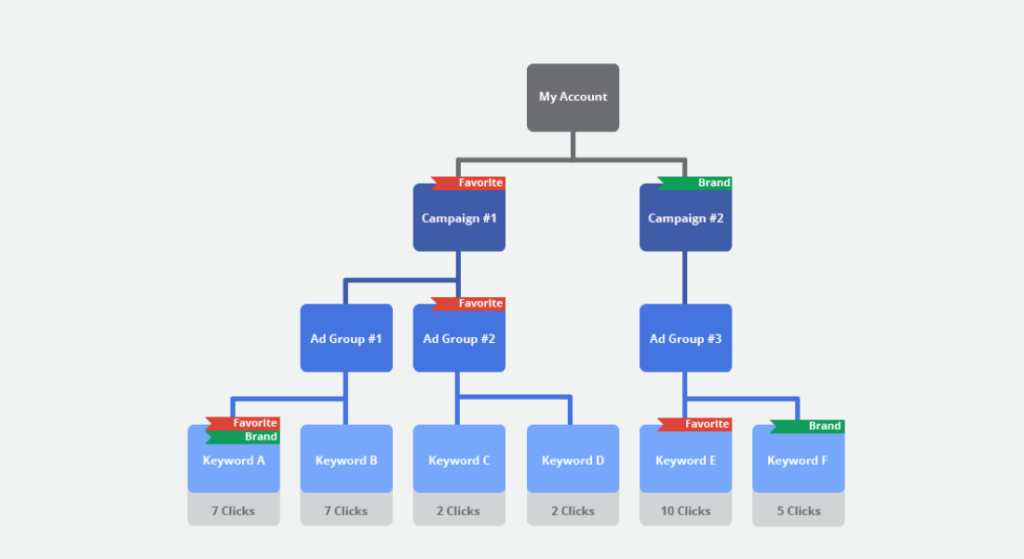
Another innovative tool advertisers can use to organize and manage their campaigns is product labeling. By adding custom labels to products, business owners can efficiently create subgroups for individual items based on specific criteria. For instance, advertisers can tag seasonal products, sale items, or products and services that are most profitable for their business. It is important to note that these labels serve solely as an informational tool for advertisers and are not displayed in shopping ads. They are visible only within your Google or Microsoft Ads account.
What types of labels are available?
If the product labeling tool has piqued your interest, you might also want to explore the types of labels you can use for your goods and services. Google Shopping allows you to categorize products based on attributes such as category, product type, condition, brand, and more. If you want to segment products using other criteria, you can create your own custom labels. Examples include:
1. Sale items
To remain competitive in the e-commerce market, leveraging your discounted prices effectively can make a difference. Product labeling allows you to group sale items, highlight them, and promote them more aggressively to increase visibility among shoppers.
2. Price range
Both high-priced and budget-friendly products can drive ad clicks and attract visitors to your store. If you notice patterns in customer behavior, you can create labels based on price points, allowing you to segment and focus your promotions accordingly.
3. Product performance
Every e-commerce store has products that perform well and those that sell less frequently. With product labeling, you can identify your best-selling items and allocate resources to enhance their advertising performance.
4. Seasonal products
For stores offering a wide range of seasonal products, labeling can help group these items and strategically allocate your advertising budget. For example, as winter approaches, demand for vitamin supplements often increases. By labeling these products, you can boost their visibility and competitiveness during peak seasons.
Source: Google
Benefits of Product Labeling
Product labeling provides advertisers with several key advantages:
- Budget Control – labels enable advertisers to better manage and allocate their advertising budgets effectively.
Implementing Changes – with product labeling, you can quickly and efficiently implement changes, such as excluding seasonal products from your campaigns.
- Accurate Segmentation – labeling helps you categorize and segment your products, allowing for better ad targeting aimed at specific consumer groups.
- Flexibility in Bidding Strategies – Custom labels allow for the creation of dynamic bidding strategies tailored to various product segments, enhancing both competitiveness and advertising efficiency.
- Enhanced Campaign Reach and Performance – product labeling supports campaign optimization and precise targeting, improving visibility and overall performance, ultimately leading to higher profits.
Conclusion
To achieve successful advertising, it is crucial to utilize and combine all available tools and activities in the online space. One such tool is product labeling – a powerful feature that allows e-shop owners to optimize their advertising campaigns, enhance efficiency, and precisely target specific consumer groups. This versatile tool supports adaptation to changing market conditions and enables advertisers to respond swiftly to seasonal trends or shifts in product demand. If product labeling has piqued your interest, our BlueWinston tool, with over 10 years of experience and recognition as one of the most respected Channel Partners, introduces a new level of campaign effectiveness. It offers a cutting-edge labelizer to the e-commerce sector, designed to align performance and efficiency for all users.