 Skip to content


Every online marketer knows the feeling – constantly searching for ways to get more for less.
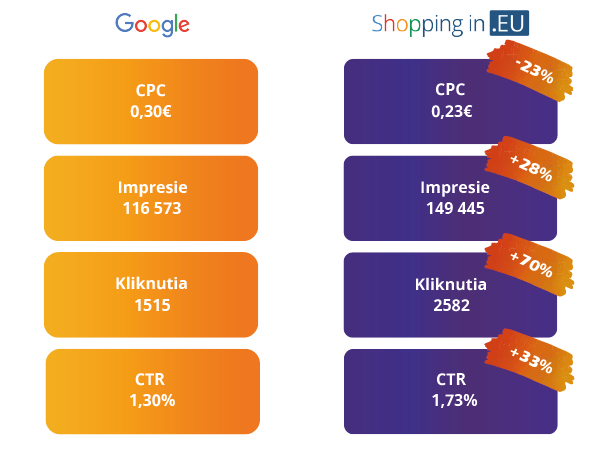
That’s why many switch their e-shop to a CSS partner after hearing that clicks will be cheaper, performance better, and campaigns more efficient. And it’s true! Plenty of data confirms that a CSS partner can reduce CPC by roughly 20% by eliminating the so-called Google margin.
But in reality, things often look very different: they switch to CSS, enjoy two weeks of nice results… and then nothing. Performance stagnates, conversions drop, or don’t improve at all. And the e-shop ends up feeling like “CSS doesn’t work.
However, the problem usually isn’t the CSS itself. The real issue is what prevents it from working to its full potential.
Expectations vs. Reality
The most common mistake is expecting CSS to automatically fix everything for you.
E-shops often hope that a CSS partner will:
- increase sales on its own
- improve conversions without any effort
- replace the work of an agency
But the truth is very different. CSS only improves your starting position in the auction, removes the Google margin, and gives you cheaper clicks. If your campaigns, product feed, and bidding strategies aren’t working on their own, cheaper clicks won’t change a thing.
It often happens that e-shops turn on CSS and expect a miracle. Two or three extra conversions? Great. A 40% improvement? They usually don’t get it, because the core campaign is already maxed out.
Product Feed & Data Quality: The Forgotten Foundation
One of the biggest mistakes e-shops make when switching to a CSS partner is ignoring the quality of data in their product feed.
Many think: “We switched to CSS, the budget is ready – it will work somehow. But if the feed is neglected – missing attributes, inaccurate titles, mismatched categories, weak images, or availability and price data not updated regularly – Google struggles to properly evaluate your products and show them where they could sell effectively.
Why this is a problem even if you get cheaper clicks through CSS
Google is placing more and more emphasis on completeness, accuracy, and freshness of data when displaying products. A feed that doesn’t meet these requirements can see significantly worse performance, regardless of how cheap your clicks are.
Specific elements that are often overlooked and their impact
- Attributes and identifiers (like GTIN): If the GTIN is missing in the feed, or attributes such as size, color, or material are not filled in, Google has a harder time accurately matching your product to user intent.
- Product titles: Use close to the full 150 characters, avoid promotional “fluff,” and include key properties such as color, size, or model.
- Categorization and product details: If categories are inaccurate, your products may appear for irrelevant searches… or not appear at all.
- Images: Google recommends using high-quality product images with minimum required resolution, on a white or transparent background, without logos or watermarks, and with minimal staging or added elements.
- Data updates (price & availability): If your feed contains outdated prices or incorrect availability, Google may reduce your ad visibility — or even block your ads entirely.
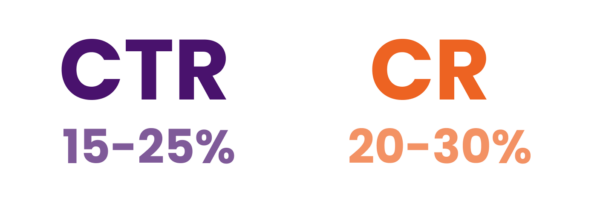
According to NumberAnalytics, an optimized feed can improve click-through rate (CTR) by 15–25% and conversion rate (CR) by 20–30% when titles, attributes, and images are comprehensively optimized.
Source: Number Analytics
If you switch to a CSS partner but your feed is weak, the real advantage of CSS can be significantly reduced. Even with a lower CPC, your efficiency may be limited because Google “doesn’t see” or prioritize your products.
Time and Patience: CSS Is Not an Instant Miracle
An e-shop turns on a CSS partner, waits a week… and when they don’t see immediate growth in conversions, they end the partnership. But a week in Shopping campaigns is roughly equivalent to a single day in SEO – practically nothing. CSS only starts affecting the auction after some time, once Google has “learned” how to work with the new account, feed, and bidding.
That’s why initial results usually appear after 2–4 weeks, with stable performance following after 6-8 weeks.
Concerns That a CSS Partner Will Increase Your Click Costs
This is a myth that can kill performance before it even starts.
The truth is, a CSS partner cannot raise an e-shop’s CPC because Google never places two ads for the same product from the same merchant in the same auction.
The result?
The e-shop doesn’t lose anything. On the contrary – products can appear multiple times through different CSS partners, but never for the same product in a single auction. You can read more about this topic here.
Conclusion and Summary
Switching to a CSS partner can bring real benefits, such as lower CPC, better visibility, and more efficient campaigns. However, it’s crucial to prepare your products and feed to meet Google’s requirements. The combination of the right partner and high-quality data is the key to higher performance and better return on investment.
Try it with us
As a premium Google CSS partner, we’re here to help you achieve better results and boost the success of your campaigns. If you haven’t worked with a CSS partner before, take advantage of our 30-day free trial of Shopping in EU and experience all the benefits with no commitment. Just take the first step and open the door to more effective campaigns.