 Skip to content


In today’s dynamic and highly competitive e-commerce environment, business success requires a strategic approach and a focus on key activities. Staying ahead of industry trends is crucial for unlocking new opportunities and driving brand growth. One effective way to achieve this is by participating in domestic and international e-commerce events, where businesses can gain insights from industry leaders, establish valuable partnerships, and deepen their understanding of this diverse market.
To effectively engage your target audience, it is essential to embrace innovation and experiment with different advertising formats. In today’s technology-driven era, AI-powered assistants like Google’s Gemini and Microsoft’s Copilot can simplify the ad creation process. These tools not only save time, effort, and financial resources but also enhance ad relevance, maximizing the impact of your campaigns.
Moreover, optimizing Return on Investment (ROI) should be a top priority for businesses aiming for sustainable growth. Achieving the highest possible ROI requires a clear understanding of the balance between costs and benefits across all marketing activities. Simply investing in marketing is no longer enough—companies must ensure that every euro spent generates maximum value. Ignoring or underestimating ROI can lead to unnecessary losses and jeopardize long-term financial stability.
What Does ROI Stand For?
ROI, or Return on Investment, is a key metric that evaluates the efficiency of marketing expenditures relative to the revenue or profit they generate. In simple terms, for every euro invested in advertising, the goal is to generate more than one euro in return, ensuring a positive ROI. The formula for calculating ROI is:
ROI = (Net profit from investment / Investment cost) x 100
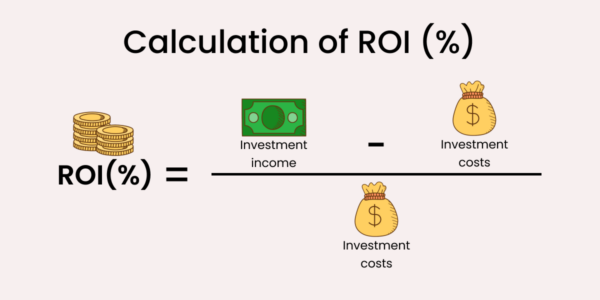
Net profit is calculated as the difference between the revenue generated from an investment and its cost. The higher the ROI, the more effective the investment has been. A positive ROI indicates that the investment has generated a profit, whereas a negative ROI signals a loss and may indicate inefficient resource allocation. ROI is also widely used to compare different investment opportunities, helping e-commerce store owners optimize budget allocation and make informed strategic decisions.
Factors Influencing ROI
- Level of Competition: the competitive landscape determines the level of investment required for marketing and pricing strategies.
- Customer Experience with Your E-Shop: website design, content relevance, and UX significantly impact sales and, consequently, ROI.
- Shipping and Delivery Efficiency: the effectiveness of logistics and shipping processes influences customer satisfaction and directly affects repeat purchases.
- Brand Visibility: search engine ranking and brand awareness within the target audience greatly influence the effectiveness of advertising campaigns, impacting overall sales.
Effective Strategies for Maximizing ROI
For long-term success, e-commerce businesses must continuously monitor ROI and actively optimize it. Below, we have compiled key strategies to help you increase profitability and minimize unnecessary expenses.
Source: Google
1. Identifying and Eliminating High Costs
Every e-commerce store owner should begin by thoroughly analyzing their expenses and identifying the highest-cost areas. Whether it’s energy, logistics, supplier relationships, or operational expenses, a clear understanding of financial flows enables businesses to manage costs more efficiently and allocate resources strategically.
2. Process Automation and the Use of Modern Technologies
Automating business processes can help companies save both time and money. Investing in digital tools such as CRM systems, automated marketing platforms, or innovative solutions like Labelizer from our BlueWinston team enables businesses to optimize workflows, allocate budgets more effectively, and reduce error rates. Additionally, leveraging advanced technologies can significantly enhance the overall customer experience in an e-commerce store.
3. Monitoring and Evaluating Campaign Performance
ROI optimization is a long-term process that requires consistent tracking of key performance indicators (KPIs). Businesses must regularly analyze the effectiveness of expenditures and investments, evaluate marketing and operational data based on real-time results, and adjust strategies according to market trends and consumer behavior.
4. Supply Chain Optimization
Holding excess inventory ties up valuable capital that could be invested elsewhere. Maintaining optimal stock levels is essential to financial efficiency. Effective inventory and supplier management helps businesses prevent overstocking and stock shortages. Collaborating with reliable suppliers who can quickly respond to market changes allows for better production planning and minimized financial risks.
5. Outsourcing and Strategic Partnerships
Certain business functions—such as IT support, customer service, manufacturing, and digital marketing—can often be more cost-effective when outsourced rather than managed in-house. Partnering with specialized providers allows businesses to leverage industry expertise, reduce operational costs, and focus on core business activities. A particularly effective partnership for boosting ad campaign visibility, increasing ad clicks, and improving ROI is working with Google CSS (Comparison Shopping Service) partners. By collaborating with one or more CSS providers, businesses can benefit from a discount of up to 20% on CPC, reducing advertising costs while also gaining premium tools, priority expert support, and maximum ad visibility in search results. Among Google’s premium CSS partners, our Shopping In EU team stands out by offering advanced features beyond the standard benefits.
Conclusion
Maximizing ROI is a continuous process that requires careful planning, the implementation of effective strategies, and regular performance evaluations. Businesses that focus on optimizing their investments and managing costs efficiently are better positioned for long-term success and competitiveness in the market.
If you’re looking for ways to better manage your campaigns and improve performance, take advantage of our 30-day free trial. Our PPC specialists will help identify the best solutions tailored to your needs. Book a free consultation today to learn more.