 Skip to content


In today’s digital landscape, staying on top of trends is essential for maintaining a competitive edge. That’s why we actively participate in both domestic and international events, where we gain valuable insights and inspiration. These events allow us to continuously enhance our services, streamline campaign management, and improve relevance—ultimately driving better visibility and more effective advertising.One of the key events we couldn’t afford to miss was Czech Online Expo 2025—the largest Czech trade fair dedicated to e-commerce and online marketing. This two-day event, held in Letňany, Prague, welcomed over 5,000 attendees, who had the unique opportunity to listen to more than 150 expert lectures from industry leaders. Additionally, more than 100 exhibitors showcased their products and services across various sectors of digital business.
Every year, Czech Online Expo serves as a meeting point for marketers, e-commerce owners, PPC specialists, SEO experts, and other professionals looking to exchange knowledge and discover the latest trends in digital marketing. It is also an excellent opportunity to establish valuable connections and foster partnerships. This year’s event focused on several key topics that will shape the online business landscape in the coming months. Let’s dive into the most important insights we took away from the expo.
How to Effectively Evaluate Campaigns?
Accurate campaign analysis is the key to success in digital marketing. One of the most common mistakes companies make is misallocating their marketing budgets and taking an overly simplistic approach to data interpretation. To assess campaign performance effectively, it’s crucial to analyze data in a broader context and differentiate between three key types of metrics:
- Business Metrics – These measure the overall performance of a company. One of the most important is ROAS (Return on Ad Spend). When calculating ROAS, it is essential to clearly define what is included in the analysis—whether VAT, shipping costs, returns, or profit margins are factored in. Misdefining these elements can distort actual ROI.
- Campaign Metrics – These evaluate the effectiveness of specific advertising strategies. Key indicators include PNO (Proportion of Costs in Revenue), ROAS, POS (Share of Revenue from Ads), and CPA (Cost Per Acquisition). The choice of metrics depends on business goals, product range, and market competition.
- Communication Metrics – These assess the effectiveness of creative content within campaigns. Metrics such as CTR (Click-Through Rate), benchmark CTR, view rate, and average video watch time are commonly used. Well-crafted creatives can have a significant impact on campaign results, making it essential to track these indicators and optimize content accordingly.
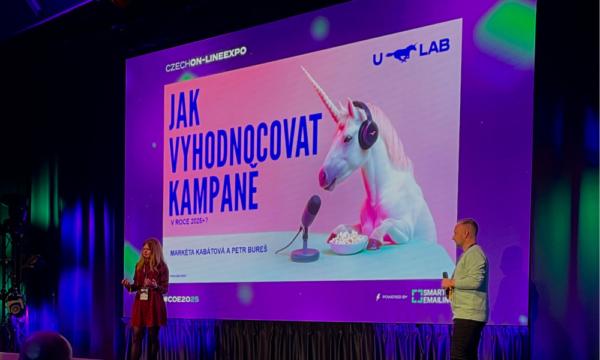
An essential part of successful campaign evaluation is the ability to predict outcomes before launching a campaign and later analyze whether the estimates aligned with reality.
Building a Strong Brand
One of the most effective ways to strengthen customer relationships is User-Generated Content (UGC)—content created by users themselves, which is perceived as more trustworthy than traditional advertising. Another highly effective strategy is community-driven content, actively leveraged by brands like McDonald’s, Duolingo, and Ryanair. These companies deliberately create content that customers love to share, comment on, and engage with, leading to greater customer loyalty and organic brand visibility—without requiring massive media spending. To thrive in today’s oversaturated market, brands must move beyond one-way advertising and embrace interaction, community engagement, and long-term relationship building with customers.
How to Stand Out from the Competition?
The e-commerce space is more competitive than ever, making differentiation increasingly challenging. Most online stores sell similar products, use the same promotions, and follow comparable visual styles. To truly stand out, brands must go beyond design—the real key is to integrate UX with marketing. Industry leaders like Apple and Alza recognize that even small UX improvements can significantly boost conversions. Every touchpoint in the customer journey—from the first interaction with a brand to completing a purchase—must be carefully designed to ensure a seamless, intuitive, and pleasant experience.
However, differentiation isn’t just about visuals. A great example is Revolut, which didn’t rely on flashy design but instead focused on clear, fast, and hassle-free financial management. This simplicity and functionality became its main competitive advantage.
Another crucial principle is the 5-second rule—a brand must clearly communicate its unique value within the first five seconds. If customers don’t instantly understand what the company offers and what sets it apart, they are likely to lose interest. Standing out today means offering real added value, whether through innovative UX, an optimized customer journey, or a well-defined unique selling proposition (USP).
How to Maintain Organic Traffic with SEO
SEO is no longer just about keywords—it requires continuous content optimization and trend monitoring. To sustain high organic traffic, a website must be regularly updated and technical issues must be eliminated. A strong foundation for this includes frequent content updates, such as fact-checking, expanding FAQs, and improving internal linking. Conducting an SEO audit at least once per quarter is also crucial, as it helps identify and resolve potential issues before they impact rankings. For better content targeting, performing a Content Gap Analysis is highly beneficial, as it helps identify missing keywords compared to competitors. Effective SEO is, therefore, an ongoing process of refining both content and technical aspects to improve search engine visibility.
Creating Viral Content on Social Media
Success on social media doesn’t depend on expensive equipment but rather on a great idea and a deep understanding of the target audience. The key is to create content that resonates with and engages viewers. One of the most powerful elements is storytelling—having a well-structured narrative that evokes emotions. Another crucial factor is authenticity, as content should feel natural and align with audience expectations. Additionally, incorporating interactive features such as polls and questions can significantly increase engagement.
An important aspect of viral content is the use of associations, allowing viewers to instantly grasp the message without the need for direct explanation. When content references familiar situations or concepts, people are more likely to remember and respond to it. Examples include vlogs, room tours, or skits that recreate well-known moments, helping audiences form an immediate emotional connection. By combining storytelling, authenticity, interactivity, and recognizable associations, brands can not only capture attention but also build a stronger bond with their audience—an essential foundation for creating viral content on social media.


Conclusion
Conclusion
The Czech Online Expo is a prestigious event that drives the e-commerce industry forward, bringing together individuals and businesses within the sector. This year, once again, it delivered a wealth of innovative talks, practical insights, and forward-thinking perspectives on digital marketing. At Shopping In EU, we are committed to helping e-shop owners grow, which is why we were delighted to be part of this event and gain valuable inspiration from industry experts. Everything we’ve learned will be integrated into our services to ensure we continue delivering the best solutions. If you’re looking to leverage the latest e-commerce trends for your online store, book a free online consultation with our PPC specialists. Together, we’ll find the best strategies to help your business thrive.
Want to experience the atmosphere of Czech Online Expo 2025 and get a glimpse of the event highlights? Check out our reel, where we’ve captured the most exciting moments.