 Skip to content


The days when online sales rose and fell based on who offered the lowest price in comparison engines are long gone. Today’s customer isn’t looking for the cheapest product, but for the most relevant one – at that particular moment, in their specific context, language, and budget.
Customers don’t click blindly. They think, ask questions, compare, and expect technology to help them make a decision as quickly as possible – ideally before they even start digging through ads.
The very foundation of search has changed. Instead of lists of links, we now get direct answers. Instead of keywords, real conversations. And it’s in these moments that purchasing decisions are made. Not after ten clicks, but often after just one.
So the real question is: how do you make sure that one click leads to a conversion?
Search as a Conversation
With the rise of generative AI, search has evolved from a technical process into a natural conversation. Users no longer search using “keywords” but instead ask tools like ChatGPT or Copilot questions in everyday language for example: “Can you recommend a good coffee machine under €200?”
The result is not a list of links, but an answer with specific product suggestions. These are not ad banners or sponsored posts – they are the outcome of processing data such as product names, descriptions, prices, reviews, availability, and context.
Source: x.com/OpenAI
Context Is the New Currency
The difference between a click and a conversion today increasingly depends on how well AI understands the user and how well a product can respond to their needs.
When recommending products, generative AI considers:
- Query language – what exactly the user said or typed, and which words they used
- Context – who the product is for, where the user is located, what their budget is
- Historical preferences – if they previously mentioned a favorite brand, color, or type of product
- Data quality – whether the product has proper categorization, specifications, reviews, current pricing
In this landscape, success in sales is becoming less about advertising, and more about how well products are described, structured, and relevant to the given query.
Personalization When Every Customer Expects Something Different
While context addresses the situation a customer is in, personalization takes into account who the customer is.
Today, generative AI can:
- Connect past interactions with the current query
- Predict preferences based on purchase history
- Analyze the tone and language the user prefers
- Offer suggestions tailored to a specific individual
This means that two identical queries can lead to two completely different results, depending on who asked the question.
Multimodal Search
Today’s customer doesn’t just type into a search bar. Instead, they might:
- Take a photo of something that caught their eye
- Describe what they’re looking for in a chat
- Use voice search during their commute
- Combine text, emojis, links, and personal preferences
Search is becoming a truly multimodal experience, which places new demands on product data. A product name and price are no longer enough. What’s needed is the previously mentioned context, images, accurate categories, clear descriptions, and data connections that AI can understand and evaluate across different formats.
Conversion Starts Before the Click
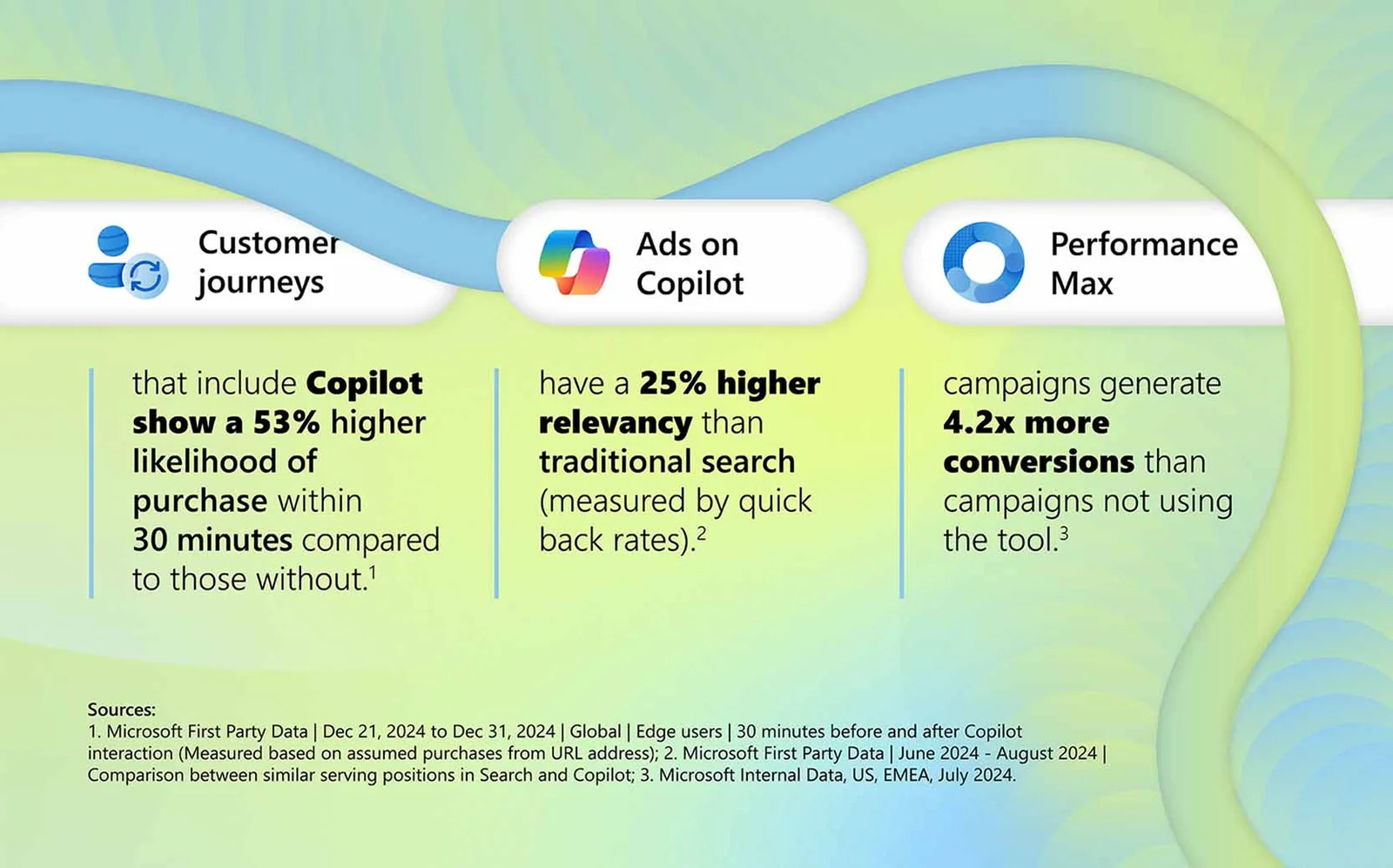
The biggest shift is happening at the very moment of decision-making. While a click used to mark the beginning of the buying process, today it’s often the end of it.
Now, the customer clicks only after they’ve already made up their mind. And that decision was shaped by what the AI told them, not by what they saw in an ad.
Source: Microsoft Advertising
Summary
Shorter paths, higher expectations…
Generative AI shortens the buying journey, reduces the number of touchpoints, and simultaneously raises the bar for every single interaction. Customers expect the recommended product to be immediately relevant—not just technically, but emotionally as well.
For merchants, this means they can’t just optimize the campaign – they have to optimize the entire product experience: names, descriptions, visuals, categories, availability, reviews, and overall presentation.
A well-structured product feed is not just about technical integration. It’s your digital language – how you speak to AI, and through it, to your customer.