 Skip to content


Even though summer is still in full swing, the marketing calendar is already turning toward preparations for the winter season. August is actually the ideal time to start planning advertising campaigns that will stand out during the holidays.
Why is that? Because consumers are starting to plan their gifts and shopping earlier each year, which means brands that reach them early naturally gain an advantage.
The 2025 winter season is expected to be full of promotions, sales, and rising customer expectations. At the same time, it will be shaped by changing habits, economic challenges, and new technological possibilities.
To help you navigate it all and plan campaigns that are not just visible but truly effective, we’ve looked at five key trends that will shape this year’s holiday season.
1. Promotions
Promotions will be the king of the holiday season…
Winter sales are no longer just about Black Friday. Consumers today expect discounts across multiple days, starting as early as Cyber Monday or even before. More importantly, they begin searching for good deals much earlier than they used to.
So what does that mean for your brand? If you wait too long to launch your campaigns, there is a high chance your potential customers will have already made their choices. That’s why it is important to have a clear plan in place that includes not only key dates but also strong offers, loyalty perks, and eye-catching creative that makes an immediate impact.
2. Budget
Consumers are keeping an eye on their budgets, but they still plan to shop…
Inflation and rising prices are still part of the conversation. But despite ongoing concerns, most people plan to spend about the same as they did last holiday season. The difference is that they are approaching it with a bit more caution.
What can you do? Use the right tone in your messaging. Highlight value, not just discounts. Show how your product or service solves a real need, brings joy, or saves time. Leverage dynamic ads and test different messages to see what resonates most with your audience.
3. Price
Price is not the final step in decision-making. It is often the starting point…
Today’s consumers begin the buying process by searching and comparing, which means price plays a key role from the very first click.
It is completely normal for people to research, follow deals, and look for the best value. So don’t wait until they make a decision. Be present where they are searching. Use search campaigns, product ads and responsive formats that show not just the price, but also the benefits. Your ideal customer may already be comparing options and just needs the right trigger to act.
4. Travel
Travel will influence what people buy…
Not everyone plans to stay home for the holidays. In some regions, increased travel is expected, while in others, people will remain local. This directly impacts gift choices. Lightweight, portable items, digital products, or gift cards may have the upper hand.
Why does this matter? If you know where your audience is and how they plan to spend the holidays, you can adapt both your offer and your messaging. This is where personalization and smart targeting come into play.
5. Gifting
People are no longer buying gifts just for close family…
The nature of gifting has evolved. More and more, people are buying presents for colleagues, friends, or even neighbors. And each of these groups responds to different types of communication.
That is why it pays to work with distinct audience segments. Adapt your language, visuals, and offers to match their needs and expectations. Consider generational and cultural differences to make your message more relevant and effective.
The Importance of Timing
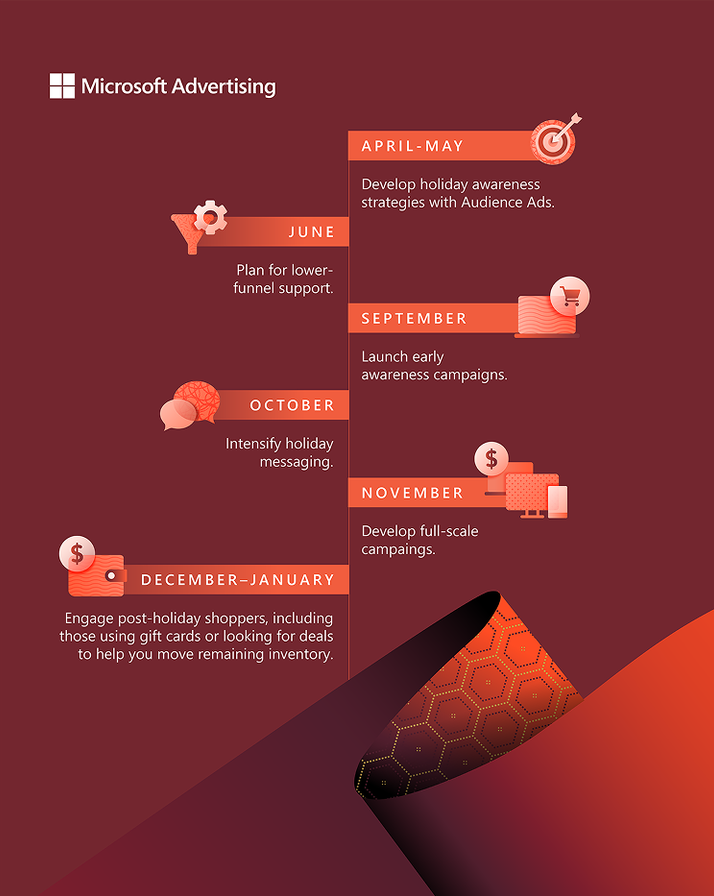
Content matters, but timing is just as critical when it comes to campaign success. The most successful brands begin testing ad formats as early as August, ideally through smaller campaigns that allow them to compare different creatives, messaging strategies, and format combinations.
September is the perfect time to launch brand awareness efforts and engage early holiday shoppers. Many brands increase their visibility during this period through product feed campaigns and category-level promotions.
By October, the holiday mood starts to build. This is the time to strengthen both visual and messaging elements, activate performance campaigns such as P.Max, and begin scaling budgets to capture the first wave of holiday buyers.
Source: Microsoft Ads blog
November is the peak of the entire season. During the so-called Cyber 5 period, it is essential to have all key channels live, monitor performance in real time, and be ready to make quick adjustments.
December and January should not be overlooked. After the holidays, a new wave of interest emerges from customers using gift cards, returning items, or intentionally waiting for post-holiday sales. January is often underestimated, even though it can bring up to a 25 percent year-over-year increase in conversions.
Conclusion
The winter season is the most important time of year for many brands. And while it may still feel far off, the truth is that now is the most valuable time to prepare.
Remember, a successful holiday campaign doesn’t start in December, it starts in August. So build your strategy, set your budgets, activate your creative, and reach your customers before your competitors do.