 Skip to content


For the success of advertising campaigns in the e-commerce market, it is essential to consider multiple factors that influence their effectiveness. A key step is selecting the right type of campaign, which will allow your products to stand out from the competition and capture the attention of your target audience. Proper campaign setup, along with relevant execution, creates a solid foundation for further ad development, leading to the best possible results.
Currently, the e-commerce market offers a wide range of advertising options from which you, as an e-shop owner, can choose. For your brand, you can opt for traditional text ads displayed in search results or rely on interactive Display Ads to effectively grab your audience’s attention. You can also showcase your products through Shopping Ads or focus on maximizing ad efficiency by directing your attention to Performance Max campaigns. With so many options available, understanding your audience, their needs, and preferences is crucial.
Additionally, to enhance the success and visibility of your campaigns, you can take advantage of available collaboration opportunities. One such opportunity is utilizing Google’s CSS partners, among which you can find our Shopping In EU team.
What Are Performance Max Campaigns?
Source: Google
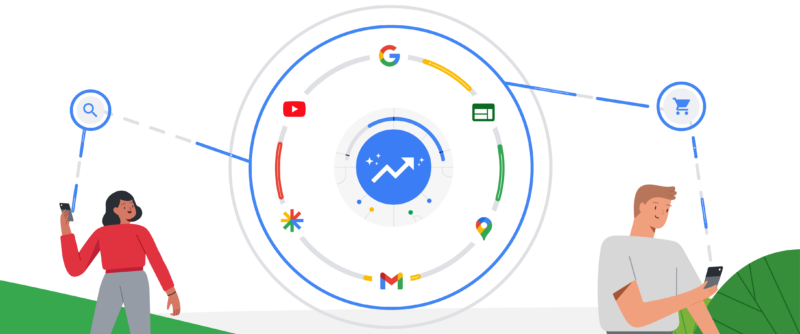
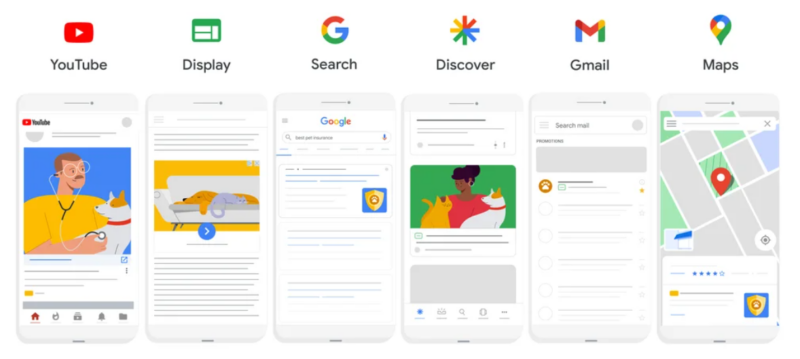
Performance Max campaigns entered the e-commerce landscape in 2021 and immediately generated significant interest among advertisers. When properly set up and fully leveraged, they represent an extremely effective campaign type for driving business growth. They are inherently multi-channel, allowing businesses to reach consumers across the entire Google or Microsoft ad network while also automating processes – saving e-shop owners valuable time and effort. P.Max campaigns utilize machine learning to optimize ads based on predefined goals and artificial intelligence to enhance conversions. This enables advertisers to achieve optimal results without the need to create separate campaigns for each individual channel.
Key Benefits of P.Max Campaigns:
- Improved performance and targeting – Campaigns are optimized based on your goals using advanced machine learning.
- Automation – Achieve better results without requiring manual management.
- Expanded reach – Engage a wider audience through multi-channel ad placements.
- Simplified setup and management – Provide essential creative assets (graphics, text, videos) and consolidate them under a single campaign without the need to create separate ads for each channel.
- Data-driven decision-making – Access detailed performance reports to streamline campaign adjustments and refine your advertising strategy.
- Adaptability – Algorithms swiftly adjust to unexpected shifts in consumer behavior, emerging trends, or seasonal fluctuations.
Effective Ways to Boost P.Max Campaigns
Source: Google
While P.Max campaigns are a highly effective type of advertising, fully leveraging their potential requires strategic execution. To make optimization easier, here are several proven strategies to enhance campaign performance and maximize profits.
1. Pay Attention to Your Campaigns
A crucial step in maximizing P.Max campaign effectiveness is allocating sufficient budget and time. Google recommends running campaigns for at least six weeks to gather enough data. The algorithm needs time to analyze user behavior and optimize targeting, bidding, and ad placements accordingly.
2. Use a Variety of Creative Assets
To ensure your campaign is eligible for display across all inventory types, you should include a diverse range of creative assets. If you’re using a product feed from Google Merchant Center, there’s no need to manually upload product images. Instead, complement your product visuals with lifestyle or brand-oriented images. In P.Max campaigns, video content is also essential – if you don’t upload a video, Google will auto-generate one, which may not align with your brand identity. Additionally, videos enhance ad visibility and drive consumer engagement.
3. Create Asset Groups
Organize creative assets into themed groups, similar to ad groups. Each asset group should include a mix of visual and textual elements, enabling ad placements across different channels. Once you launch an initial campaign, you can expand your asset groups and tailor them to your business needs.
4. Leverage the Customer Acquisition Feature
This feature allows you to define your audience more precisely, choosing whether to target new users or both new and existing customers. Leveraging customer acquisition settings helps improve targeting efficiency and expand your customer base.
5. Keep Your Product Feed Optimized and Up-to-Date
For businesses using Google Merchant Center, an optimized and regularly updated product feed is crucial. Ensure your feed includes detailed product information such as brand name, product type, SKU, UPC codes, and Google taxonomy. This improves ad relevance and enhances campaign performance.
6. Select the Right Bidding Strategy
Choosing the right bidding strategy is key to achieving campaign objectives. When starting a Performance Max campaign, it’s recommended to first gather sufficient conversion data before transitioning to advanced bidding strategies. Initially, using Maximize Conversions or Maximize Conversion Value helps establish a solid data foundation, allowing for more sophisticated bidding optimizations later.
7. Utilize Product Labeling
Adapting to modern advertising technologies is essential for maximizing P.Max campaign efficiency. Product labeling enables you to categorize products based on attributes such as category, seasonal promotions, or special discounts. This provides deeper insights into product performance and helps refine your advertising strategy for greater profitability. The BlueWinston Product Labelizer takes labeling a step further by offering seven labeling options instead of the standard four, allowing for better segmentation based on ROAS, increased product visibility, and more efficient budget allocation.
Conclusion
Conclusion
To succeed in e-commerce, it’s crucial to choose the right advertising strategies that make your business stand out and effectively reach the right audience. Performance Max campaigns provide a powerful solution for showcasing products and services online, offering automation, broader reach, adaptability, and AI-driven optimization.
However, unlocking the full potential of P.Max campaigns requires a strategic approach – incorporating diverse creative assets, optimizing product feeds, selecting the right bidding strategies, and utilizing advanced features like product labeling. By implementing these strategies, you can significantly improve campaign performance, boost ROI, and expand your audience reach. If you need expert guidance on campaign optimization or want to explore the capabilities of our Product Labelizer, feel free to book a consultation with our certified PPC specialists for tailored insights and recommendations.